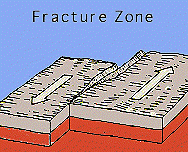
| |
Lab Activity 1.2
Plate Tectonics
|
|
|
|
Directions
|
|

|
Study
the instructional material below. Be sure to click on each of the photographs
for an enlarged view in a separate window. The
larger version is necessary to complete the assignment.
It opens in a separate window which can be resized by grabbing the bottom
right corner and dragging it. It
can also be moved by
grabbing the top heading bar and dragging it.
Be sure to close the extra window by using the X in IBM, or the close box
in MAC when you are finished using them. |
|
|
Introduction
|
|

|
The
realization that the Earth's crust is made up of plates that move around
(plate tectonics) has revolutionized the scientific study of Geology. It
is a unifying idea that explains the processes that create many of the Earth's
features. In this exercise you will study the basics of plate tectonics.
|
|
 Instruction
|
|

|
Study
the information and the diagrams of the Earth's crust depicted below. Learn
the types of structures and there movements.
Be sure
to write about what you are learning in the lab section of your notebook.
You will be expected to answer questions about the lab activity during
the lab self test and lab quiz. It helps to have your text and coloring
books open beside you for support.
|
| |
| Supporting
Information |
| Refer
to the Assigned Readings Below: |
| Marine
Biology Textbook |
Chapter
2, pages 23 to 32 |
| Marine
Biology Coloring Book |
None |
|
| |
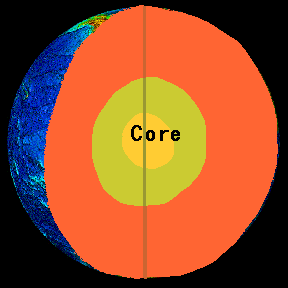
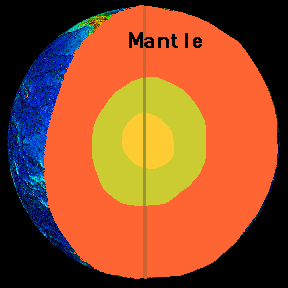
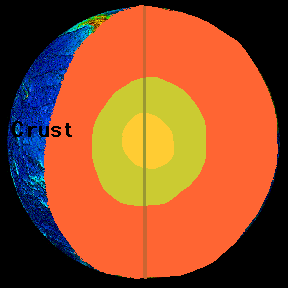
Earth's Structure
| 1. |
Core
- Solid inner
- Molten outer
- Hottest
|
 |
|
| 2. |
Mantle
|
 |
|
| 3. |
Crust
- Thin and
rigid
- Floating
on the mantle
- Coolest
|
 |
|
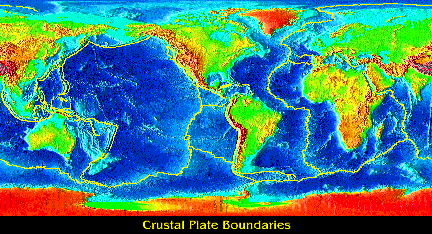
Crustal
Plates
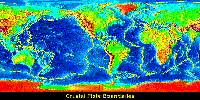
| 1. |
Plates
- Crust is
broken into large pieces that float
- 8 major
and 12 minor plates
|
 |
|
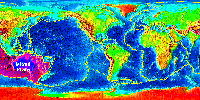
Types of Plates
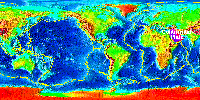
| 1. |
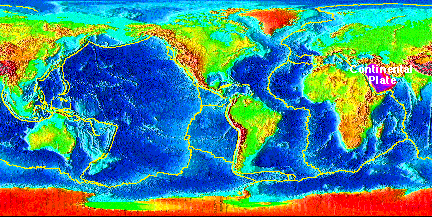
Continental
Plates
(mostly continental crust)
|
 |
|
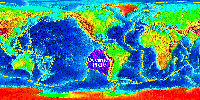
| 2. |
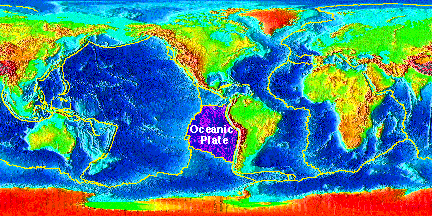
Oceanic Plates
(mostly oceanic crust)
|
 |
|
| 3. |
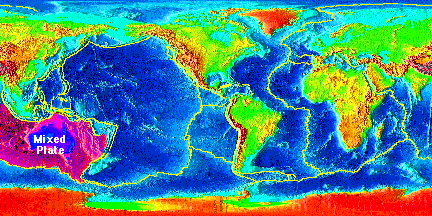
Mixed
Plates
(mix of continental and oceanic crust) |
 |
|
Plate Movements
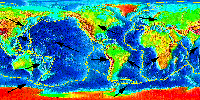
| 1. |
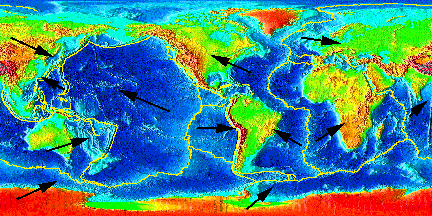
Plates move
in different directions
|
 |
|
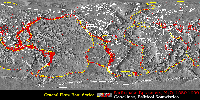
| 2. |
Plate movements
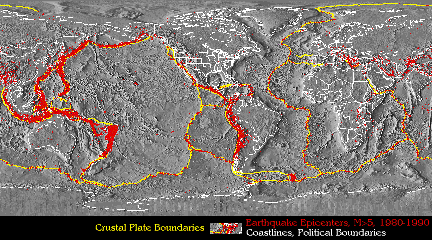
cause earthquakes, volcanism, and mountain building at plate
boundaries
|
 |
|
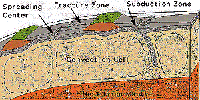
| 3. |
Plate
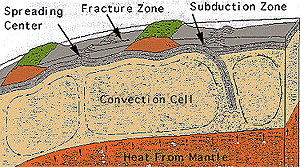
movements are driven by convection currents in the mantle |
 |
|
Types
of Plate Boundaries
| 1. |
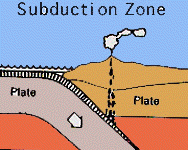
Subduction
zone - converging
(colliding)
|
 |
|
| 2. |
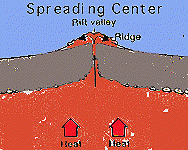
Spreading center
- diverging
(moving apart)
|
 |
|
| 3. |
Transform
boundary - shearing
(sliding past) |
 |
|
|
|
|
|
|